Can You Find the Truth by Moving into the Poorest Neighborhood?
The Devil Baby Who Wasn’t There
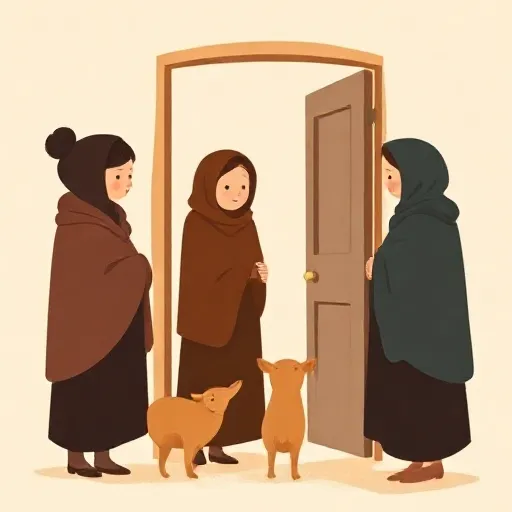
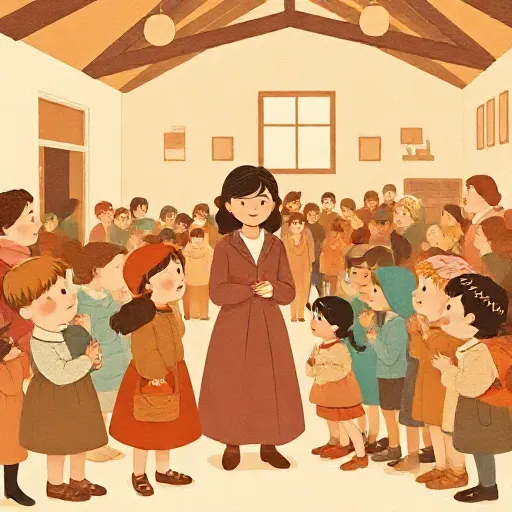
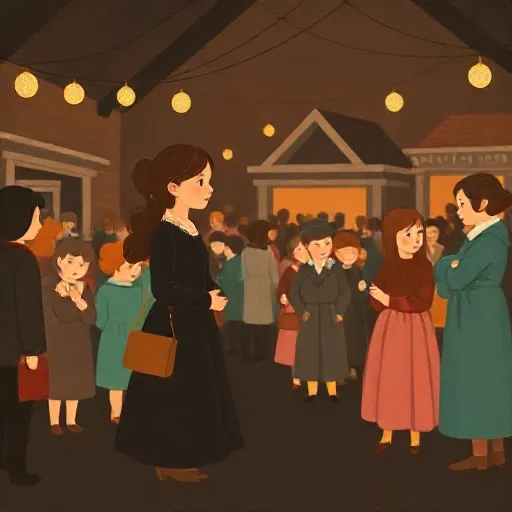
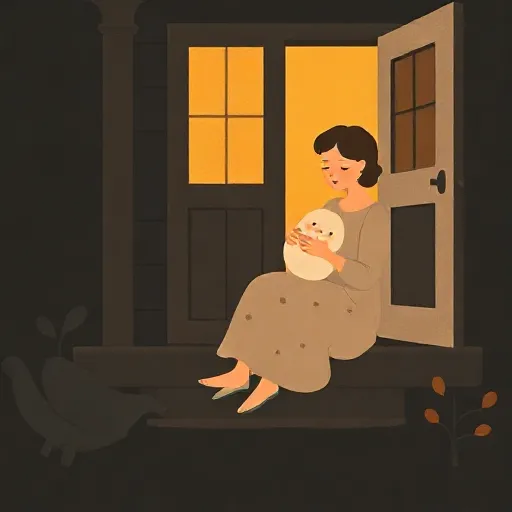
In 1913, three Italian women showed up at Hull House, a large brick settlement house in one of Chicago’s poorest neighborhoods. They had heard a rumor: inside the building was a Devil Baby—a newborn with cloven hooves, pointed ears, and a tiny tail, who could already speak in a profane voice. The women were frightened and insistent. The woman who greeted them at the door was Jane Addams (1860–1935), a middle-aged philosopher and activist who ran Hull House. She calmly told them there was no such baby. But the word spread, and for six weeks, the settlement was flooded with visitors, many offering money to see the creature. The neighborhood was in an uproar.
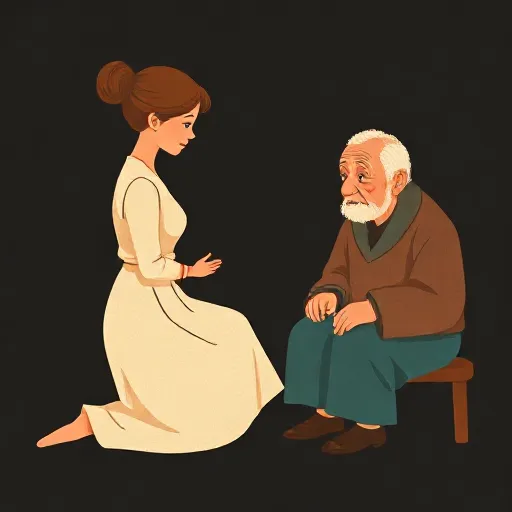
Addams could have dismissed the whole episode as silly superstition. Instead, she paid close attention. She noticed that the visitors who most deeply believed the rumor were elderly immigrant women. They didn’t just want to see a monster: they used the Devil Baby story to talk about their own lives—experiences of domestic violence, losing their children’s respect, and struggling in a strange new country. Addams sat and listened. That was her method. She called it sympathetic knowledge—a way of understanding people by temporarily entering their world, not standing outside and judging.
Addams had been running Hull House since 1889, living among thousands of immigrant families from Italy, Greece, Russia, and other places. She rejected the role of a “charity lady” who handed out aid from a comfortable distance. She wanted to learn from her neighbors, not just help them. In the Devil Baby frenzy, she found clues about memory, hope, and power. Many of the elderly women had been abused for years, and for a brief moment, the terrifying baby gave them a kind of power: their husbands and sons were afraid of divine punishment and stopped beating them. Addams wrote that memory sometimes made their lives “palatable and at rare moments even beautiful.” From listening to dozens of women she barely knew, she began to piece together a social protest—a theory about how oppression hides in everyday life.
What Is Sympathetic Knowledge?
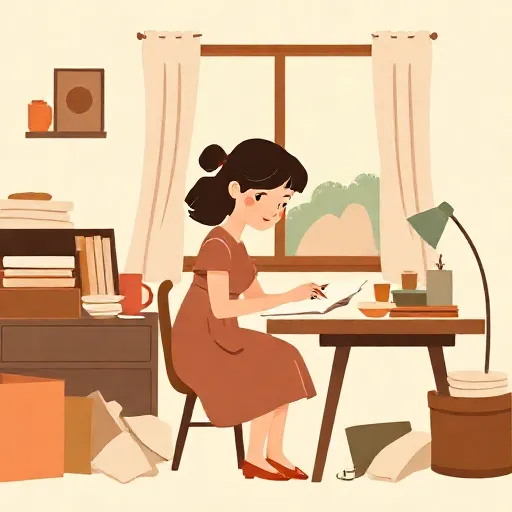
Addams’s idea of sympathetic knowledge was her version of what later philosophers call standpoint epistemology—the view that knowledge is shaped by the position you hold in society. Those who are marginalized, she believed, see truths that privileged people miss. But you don’t absorb that standpoint automatically. You have to earn it, by spending time, asking questions, and putting aside your own assumptions.
For example, Addams studied domestic workers—women who cleaned houses, cooked, and cared for children in other people’s homes, often immigrants with limited English. She observed that they had no union, no fixed hours, and were often isolated and powerless. She wrote an article, “A Belated Industry,” claiming she would present this industry from the point of view of those women who are working in households for wages. She didn’t interview them from a university office. She lived in their neighborhood and helped run a Woman’s Labor Bureau, which gave them a place to meet. Her article pointed out that men would “consider it quite impossible if it implied the giving up of their family and social ties, and living under the roof of the household requiring their services”. This wasn’t abstract philosophy. It was moral reasoning built from real women’s experiences.
Addams also practiced what she preached when she spoke publicly. Whenever she gave a lecture about Hull House, she invited a neighbor to join her on stage. That way, she said, she would “curb my hasty generalization by the consciousness that I had an auditor who knew the conditions more intimately than I could hope to do.” She wanted her ideas to be tested by the very people she was describing.
Sympathetic knowledge was never just about gathering facts. It was ethical work. Addams thought you had a duty to actively seek out the perspectives of people unlike you—not just to be nice, but because your own understanding was incomplete without them. If you only talked to people you already respected, she warned, you “tremendously circumscribe our range of life, but limit our scope of ethics.”
This active, ethical stance led her to challenge even her own heroes. Her meeting with the great Russian writer Leo Tolstoy showed just how far she was willing to question received wisdom.
Tolstoy’s Challenge: Should She Bake Bread?
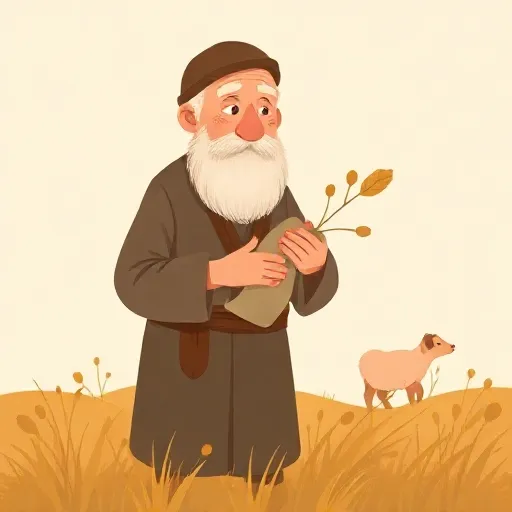
Leo Tolstoy (1828–1910) was one of Addams’s intellectual heroes. He insisted that the rich could only be moral if they worked side by side with common laborers—doing physical work, not just organizing from above. In 1896, Addams traveled to Russia and met the bearded novelist on his estate. The meeting did not go smoothly.
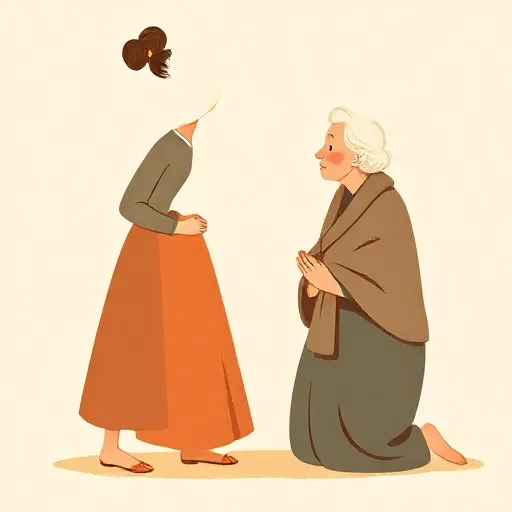
Tolstoy immediately criticized her fashionable dress sleeves, saying they had “enough stuff on one arm to make a frock for the girl”. Then he pressed her: “So you are an absentee landlord?” He found out that part of Hull House’s funding came from a farm Addams owned, and he demanded to know why she wasn’t tilling her own soil. Addams felt humbled. When she returned home, she resolved to work directly in the new Hull House bakery, kneading dough and sweating like the laborers she admired.
But reality soon forced her to think again. Every morning, a long line of people waited to see her—neighbors with urgent needs, letters to answer, clubs to run. She saw that if she spent two hours baking bread to “saved my soul,” she would be ignoring the pressing demands that only she could handle. She concluded that Tolstoy’s absolute demand ignored context. The settlement needed someone to coordinate, to listen, and to connect people to resources. That was its own kind of labor, not a selfish escape.
Addams didn’t throw Tolstoy away. She valued his moral challenge and continued to cite him as an inspiration. But she adapted his insight to the messy, complex reality of a crowded city. This pattern—testing grand ideals against concrete experience—defined her philosophy. It also shaped her vision of what progress really means.
Progress That Leaves No One Behind
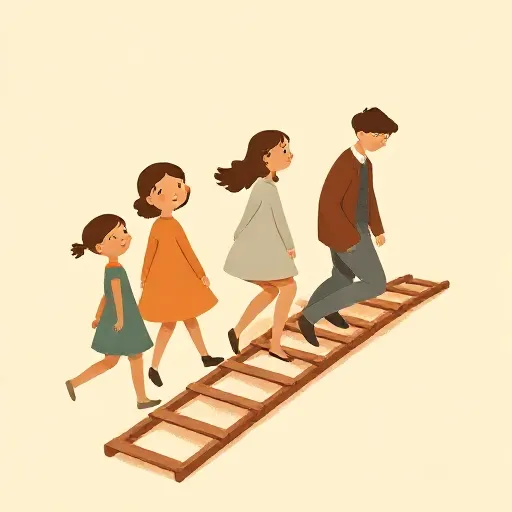
Most American philosophers of Addams’s day were pragmatists, believing that ideas should be judged by their practical effects. They often talked about meliorism—the conviction that the world can be made incrementally better through intelligent action. Addams took this idea and pushed it further. She argued that society could not claim progress unless it was lateral progress, experienced together by all.
To explain, she used a metaphor: Imagine a solitary mountain climber who reaches a dazzling peak while the villagers far below watch. That looks like progress, but it’s only vertical success for one person. True social advance, she said, is like persuading the whole village to move a few feet higher, together. “Progress has been slower perpendicularly, but incomparably greater because lateral,” she wrote. The point wasn’t to flatten everyone to the same level but to make sure no one was left behind in the dirt.
This notion led Addams to support labor unions in a radical way. She didn’t see unions as special-interest groups fighting for a narrow slice of workers. She believed unions were “trying to do for themselves what the government should secure for all its citizens.” If a union won shorter hours or higher wages, that victory would eventually benefit all workers, she hoped—showing the way toward better conditions for everyone. In her view, the “final test” of any social arrangement “must be the good of the community as a whole,” not the advantage of one side.
Addams applied this lateral standard to charity, too. She refused to call Hull House philanthropy. Temporary gifts of money or food might help, but they didn’t change the structures that kept people poor. True progress meant rebuilding institutions—schools, courts, factories—so they served everyone, not just those who had already climbed high. That demanded listening to the people who were stuck at the bottom, and then working to move the whole village up. That kind of social change, she believed, required a different moral skill: institutionalized care.
Caring for Strangers Like They’re Neighbors
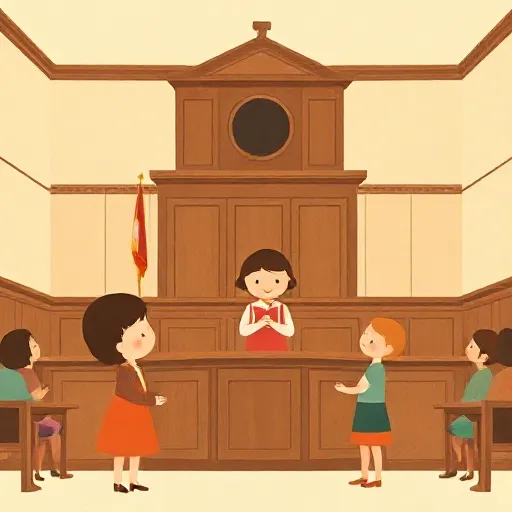
Today, many feminist philosophers talk about care ethics—a moral approach that prioritizes relationships, empathy, and context over rigid rules. Jane Addams practiced something very close to this decades before the term existed. But she added a crucial twist: care wasn’t just a private feeling. It needed to be built into the institutions of a democratic society, so that even strangers would be treated with attentive concern.
One of the most vivid examples grew out of Hull House’s work with young people accused of delinquency. Addams read the records of boys brought before the court: stealing pigeons, throwing stones at railroad workers, sleeping on the streets. Instead of simply rushing to punish them, she asked why. She talked to the boys and found a deep restlessness. Their lives were dull; factories and cramped apartments offered nothing to feed their hunger for excitement and risk. “Their very demand for excitement is a protest against the dullness of life,” she wrote. She wasn’t excusing wrongdoing. She was insisting that a just response couldn’t ignore the human being in front of her.
This approach helped create Chicago’s first juvenile court, which Hull House residents supported. Rather than treating children like small adults to be locked away, the court asked judges to consider the whole life of the offender—their family, their neighborhood, their dreams. It was an experiment in what Addams called “socializing care”: making institutions behave like a thoughtful neighbor, not a cold machine.
At Hull House itself, Addams described the settlement as an “applied university,” but one that valued emotion and universal interest alongside knowledge. She wanted public kitchens, playgrounds, and labor museums not just because they were useful, but because they demonstrated a caring democracy—one where citizens’ needs were understood from the inside. The settlement stood, she said, “for application as opposed to research; for emotion as opposed to abstraction, for universal interest as opposed to specialization.” For Addams, that wasn’t soft-mindedness. It was the most demanding kind of thinking.
Why Addams Still Matters

Jane Addams died in 1935, but the problems she tackled are still with us. Economic inequality is growing in many countries. People argue about whether the rich getting richer counts as progress, even when others fall further behind. Addams’s call for lateral progress challenges that idea directly. She would ask: Do the advances in technology or wealth really count if a whole segment of society feels left behind?
Her emphasis on sympathetic knowledge also has a modern resonance. In an age of social media, it’s easy to surround yourself with opinions you already agree with. Addams’s philosophy demands the opposite: go toward the perspectives that unsettle you, especially those from people society ignores. That’s not just a nice thing to do; it’s a requirement for clear thinking. The elderly immigrant women who visited Hull House believing in a Devil Baby turned out to be experts on memory, violence, and survival—if someone bothered to listen. Who in your world is carrying a story no one hears?
Finally, Addams’s vision of care goes beyond being a good friend or family member. She thought care should be a public habit, embedded in schools, courts, and workplaces. When you wonder whether your school rules are fair, or whether your city’s laws treat everyone with dignity, you’re asking the kind of questions Addams asked every day. She didn’t have a neat blueprint, but she left a method: live close enough to people to know their lives, listen long enough to understand, and then build institutions that lift the whole village—not just the lucky climbers.
Think about it
- If a billionaire invents a life-changing medicine that only the very rich can afford, has society made progress? Why or why not?
- Addams believed you have a duty to seek out the stories of people totally unlike you. Can you really understand someone’s life if you haven’t lived it? What makes you say so?
- Think of a rule at your school or in your neighborhood. If you could redesign it from the standpoint of the students or families who struggle most, what would you change? Would that make the rule better for everyone?