Did Natural Selection Design Every Part of You?
The Spandrels That Shook Biology
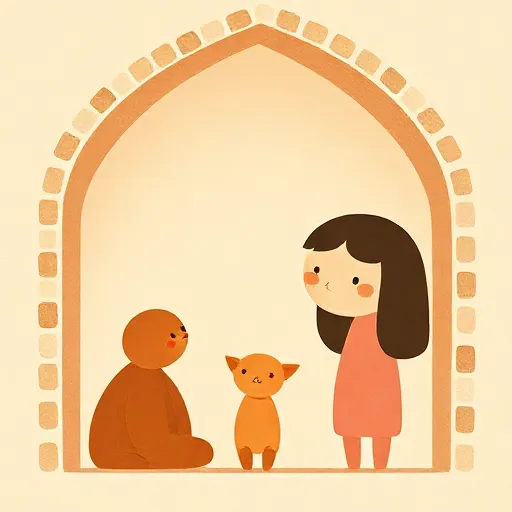
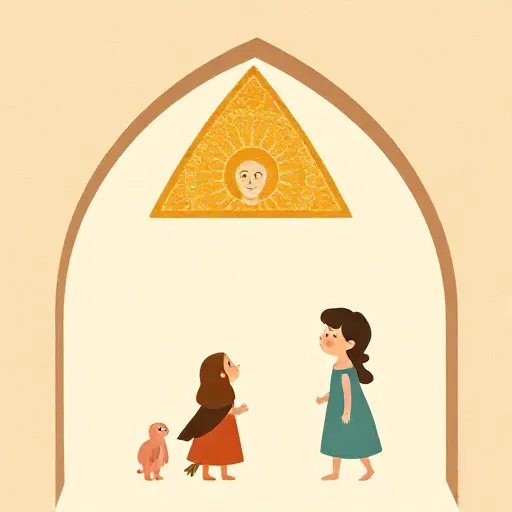
In 1979, two biologists sat in Saint Mark’s Basilica in Venice. Stephen Jay Gould (1941–2002) and Richard Lewontin (1929–2021) stared up at the cathedral’s arches. They noticed the painted spandrels—triangular spaces left over where two rounded arches meet. The mosaics were beautiful, but spandrels were never added on purpose to hold art. They simply appear because of how arches work. Paintings filled the space later, but the space came first.
That building feature gave them an idea. They wrote a paper arguing that many traits in animals are like those spandrels: side effects of how an organism is built, not direct products of natural selection. They called the habit of explaining every trait as a perfect adaptation the adaptationist programme and fired a shot that still echoes through biology today. But the fight didn’t start in 1979. It goes back at least to the 1930s.
Two giants of evolutionary biology had already staked out opposite views. Ronald Fisher (1890–1962) published a book in 1930 that argued natural selection is the single most important force shaping life. Sewall Wright (1889–1988) argued instead that many forces—selection, genetic drift (random changes from small population size), and development—all matter. Gould and Lewontin’s paper re-ignited that old quarrel and gave it a thrilling visual metaphor.
Three Ways to Be an Adaptationist
If you hear a biologist called an “adaptationist,” you might think they all believe the same thing. But philosophers of biology have teased apart three distinct flavors of adaptationism, and someone can embrace one without swallowing the others.
Empirical adaptationism is a claim about how the world is. It says natural selection is all-powerful and free from constraints. Most traits are locally optimal—you can’t tweak them without rebuilding the whole organism. This view treats other forces like drift or developmental limits as minor afterthoughts.
Explanatory adaptationism is a claim about what science should do. It says the biggest, most amazing puzzle in biology is how organisms look designed for their environment. Answering that puzzle with natural selection is the central job of evolutionary biology. Some see this as a scientific commitment; others treat it more like an aesthetic choice about what’s most worth explaining.
Methodological adaptationism is a strategy. It says the smartest first move when studying any trait is to look for an adaptive explanation. Even if natural selection isn’t the whole story, starting there is the quickest path to the truth. A methodological adaptationist can cheerfully accept that some traits will turn out to be non-adaptive—just not as the first guess.
These flavors are logically independent. You might believe that most traits are adaptations (empirical) but still think scientists should test rival explanations equally (anti-methodological). In practice, many biologists mix and match. Richard Dawkins (1941–) champions explanatory and methodological adaptationism but stays cautious about empirical claims. Others, like many evolutionary developmental biologists, reject all three.
Testing the Power of Selection
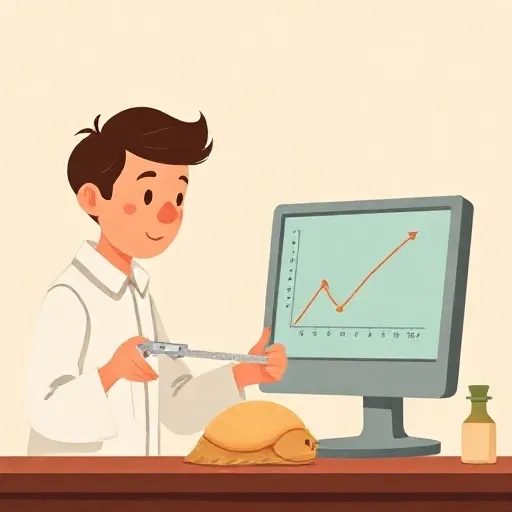
How can you tell whether a trait is a true adaptation or a spandrel? You can’t just look at how it is used now. Gould and Lewontin warned that a structure might be useful without having been shaped by natural selection for that use. To test adaptation, scientists build optimality models: mathematical stories that assume natural selection alone pushed a trait toward some best possible design. If the real trait matches the model’s prediction, that’s evidence for selection. But a good match isn’t enough.
Philosopher of biology Elliott Sober and his colleagues argued for an ensemble test of empirical adaptationism. You don’t just check whether the model fits roughly. You need quantitative accuracy and you must check whether different individuals in a population vary in ways that don’t match the model. If an optimality model nails the average but fails to predict variation among individuals, that’s a red flag. Very few studies pass both checks, so we still don’t know how often natural selection really acts as a lone, sufficient cause.
At the molecular level, the Japanese biologist Motoo Kimura (1924–1994) proposed the neutral theory, which claims many DNA changes are just random drift—selection has almost no influence. Most adaptationists accept that neutral drift matters for DNA, even if they think it matters less for visible traits like leg length. That split shows how the debate moves between levels of life.
Constraints: The Invisible Walls of Evolution
Natural selection can only work with the raw materials an organism’s development provides. Developmental constraints are biases or limits on the kinds of variation that can appear. Imagine a video game where the character can only jump three pre-programmed heights. Selection might favor jumping exactly five feet, but if the code doesn’t allow it, you’re stuck. Some constraints are like that code: they make certain shapes impossible, no matter how useful they might be.
Not every trait exists because it solved a problem. Some are byproducts. A classic example from human biology involves the female orgasm. Some evolutionary biologists argue that it is not an adaptation on its own but a side effect of how embryos develop. The tissue that produces the male orgasm—essential for reproduction—gets laid down early, before male and female bodies diverge. The female orgasm might be a spandrel, carried along because development shares the same starting materials.
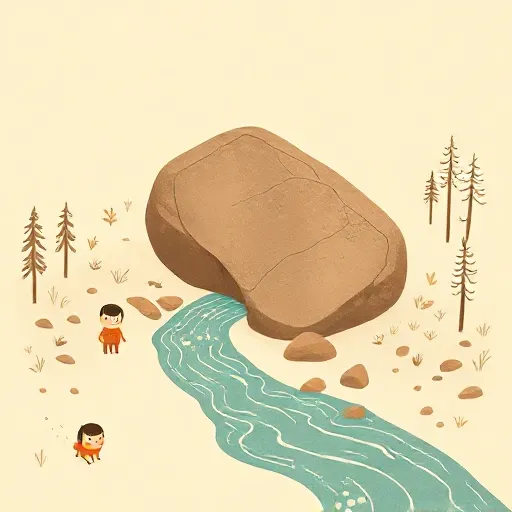
Are constraints real causes, or are they just the background against which selection acts? This is a deep philosophical puzzle. If a constraint prevents something from evolving, does it actually explain the outcome? Many philosophers say yes: constraints change the probabilities of evolutionary paths, much like a rock changes a river’s course. Others insist that only natural selection does the causal work, while constraints merely set the stage.
Why the Fight Makes Science Better
The adaptationism debate isn’t just armchair arguing. It has pushed biologists to improve how they test their ideas. Before Gould and Lewontin’s paper, many studies offered just one adaptive story and treated a good fit as proof. Critics demanded that researchers compare adaptive hypotheses against actual rivals—like drift, developmental constraints, or historical accidents—rather than just picking the most satisfying tale.
A central problem is underdetermination: available evidence often fits more than one explanation equally well. If you never check alternative hypotheses, you can easily mistake a spandrel for a masterpiece. Modern comparative methods that account for shared ancestry among species help. So do explicit tests that pit selection against drift. These tools grew stronger because the adaptationists’ critics insisted we needed them.
Philosophers also got sharper about what counts as a good explanation. When a model assumes a trait is optimal, should we trust it only if it predicts the trait’s exact distribution, not just the average? Can a constraint ever compete with selection as an explanation, or does it always just add nuance to a selection story? These questions keep the debate alive and useful, even if most working biologists don’t join the shouting.
The Spandrels in Your Own Body

Next time you notice a harmless quirk—a crooked pinky, a birthmark, a tendency to sneeze in bright sunlight—ask yourself: is this an adaptation? Maybe, but maybe not. Some features are leftovers from the way bodies are built, like the triangular spaces that just happen when you use arches. Others may be random twitches of genetic drift that neither helped nor hurt.
The fight over adaptationism reminds us that nature isn’t a perfect engineer. It’s more like a tinkerer working with already-assembled parts. That doesn’t make organisms any less fascinating. It just means that understanding them requires more than assuming every detail has a tidy selective story. The spandrels are real, and they’re part of what makes biology—and you—so interesting.
Think about it
- If a scientist told you that a quirk in your body (like an eye twitch) was just a side effect of development, would you still want an explanation for why it exists? Or would “it just happens” be satisfying?
- When you try to explain why your friend acts a certain way, do you start by assuming they had a good reason, or do you first consider accidents and random moods? How might that habit shape what you see?
- Suppose an optimality model that predicted a snail’s shell pattern was almost perfectly accurate, except for one outlying population. Should that count as evidence for natural selection, or against it?