The Violinist, the Growing Child, and the Right to Life
The Violinist in the Hospital

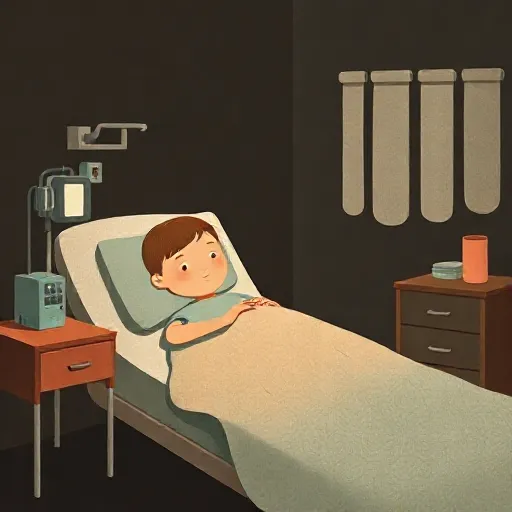
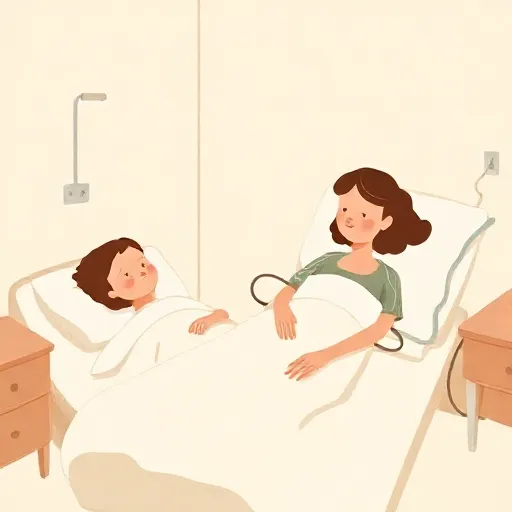
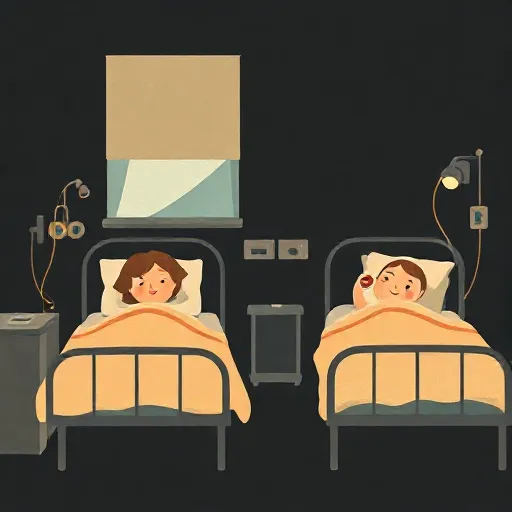
Imagine you wake up in a hospital bed. Tubes connect your body to the person in the next bed—a famous violinist. He has a rare kidney disease, and your circulatory system is now keeping him alive. You didn’t agree to this. A group of music lovers kidnapped you in the night. The doctor says you must stay attached for nine months; after that, the violinist will recover and can be unhooked. If you disconnect yourself now, he will die.
Do you have the right to unplug yourself? Almost everyone says yes. But the violinist is an innocent person with a right to life—a moral claim not to be killed. If you unplug him, you cause his death. Still, most of us feel you are allowed to do it. This famous thought experiment, created by philosopher Judith Jarvis Thomson (1929–2020), changes the way we think about abortion.
The argument Thomson challenges goes like this:
- A fetus is a person.
- All persons have a right to life.
- So a fetus has a right to life.
- It is wrong to kill something with a right to life.
- Abortion kills the fetus. Therefore, abortion is wrong.
Thomson’s violinist case shows that even if we accept that the fetus is a person with a right to life (premises 1 and 2), it does not automatically mean abortion is wrong. The right to life is not a simple rule against all killing. It depends on whether the killing is justified. The violinist is a person, yet you may disconnect yourself. So premise 4 is false: sometimes it is permissible to stop giving life-sustaining aid, even if the person dies.
What makes the difference? You didn’t consent to being hooked up. And carrying the burden of someone else’s life for nine months is a huge sacrifice. The violinist case reframes abortion not as the choice to kill, but as the choice to stop providing your body as life support.
What Does “Right to Life” Really Mean?

If someone is dying and the only thing that could save her is for the actor George Clooney to touch her forehead, does she have a right to that touch? Thomson says no. A right to life is not a right to whatever you need to stay alive, nor is it a right to use another person’s body without permission.
Now picture this: you are trapped in a tiny house with a child who is growing rapidly. Soon he will be so large that he crushes you to death. The child himself won’t be hurt—he will burst through the walls and walk free. Is it wrong to defend yourself, even if that means the child dies? Thomson argues you may protect your own life. The child is an innocent threat—he didn’t choose to grow—but his body still endangers yours.
These cases show that having a right to life does not mean no one may ever kill you. It means you may not be killed unjustly. So the real question in abortion is not just whether the fetus has a right to life, but whether abortion kills the fetus unjustly. And that is much harder to settle.
The innocent threat idea also points in the other direction. Some philosophers argue that if a fetus has full moral status from conception—the kind of value that makes it seriously wrong to harm it—then pregnancy is like an ongoing bodily intrusion. The embryo implants into the uterus and starts drawing nutrients from the woman’s body. If the fetus is an independent person, a woman might be defending herself against an invasion when she ends a pregnancy. This view turns the “right to life” argument on its head: the fetus’s personhood could actually justify abortion, not forbid it.
But defenders of the fetus’s right to life reply that a doctor performing an abortion is not acting in self-defense. A third party may not choose sides between two innocent beings. If a temporarily insane person runs at you with a knife, anyone can stop him. But if the threat is completely innocent, perhaps only the threatened person may act. Still, many find it hard to believe that moral innocence should shield a threat from anyone’s intervention.
Do We All Start with a Right to Life?

Not everyone agrees that a fetus has a right to life in the first place. One famous objection targets the idea that the potential to become a person gives you the rights of a person right now.
Philosopher Michael Tooley (born 1941) asks us to imagine a serum that turns kittens into highly intelligent, emotionally complex cats—cats that would think and feel like human adults. If such cats had a right to life, would we be required to inject every kitten with the serum? Surely not. And if a kitten had just been injected but the serum hadn’t taken effect yet, would it be wrong to inject a neutralizing agent to stop the process? Tooley thinks it would be permissible. The kitten has the potential to have a right to life, but it doesn’t have that right yet. A being’s future doesn’t automatically give it full moral status now.
Some people today think all animals have at least some right to life, so the kitten example might not feel as strong. But a modified version still works: a kitten does not have the same high-level moral status as an adult human, even if it has some. Injecting the serum gives it the potential for full moral status, yet we still don’t have to treat it like a fully moral being until the change happens. So potential alone does not equal present status.
Another version of this idea is the Actual Future Principle. Some fetuses will become persons; others will die early in pregnancy. The ones that will become persons have an actual future as a person. The ones that won’t survive lose nothing when they die. According to this view, an early fetus that will be carried to term already matters in a special way, but one that will be aborted before consciousness never had a stake in its own future. This helps explain why we might grieve a wanted miscarriage differently from an early abortion of an unwanted pregnancy.
There is also the self-consciousness objection. To have a right to go on living, you need to be able to desire to go on living. To desire your own future, you need a concept of yourself as a being that exists through time. Fetuses lack that kind of self-awareness. Some even argue that newborn infants lack it too, though that conclusion is far more disturbing to most people. A milder version says at least early abortions, before the fetus can feel anything, are not wrong because the fetus has no interests at all—it is not yet conscious.
A final surprising objection is the miscarriage objection. If fetuses are full moral persons with a right to life, then every miscarriage is a tragedy on the scale of an adult’s death. But miscarriages are extremely common—at least ten percent of known pregnancies end that way. If miscarriage were the greatest public health crisis humanity faces, we would act very differently than we do. So the idea that fetuses have full personhood from conception seems to conflict with how we actually live.
What a Fetus Loses

Philosopher Don Marquis (1935–2022) offered a different kind of argument against abortion. He didn’t try to prove the fetus is a person or has a right to life. Instead, he said that what makes killing an adult wrong is that it deprives them of a valuable future—all the experiences, relationships, and projects they would have had. A fetus also has a valuable future. So abortion is wrong for the same basic reason, unless there is a justification.
This argument from loss is powerful because it sidesteps the battle over whether the fetus is a person. Even if the fetus has no rights now, killing it still robs it of something enormous. And it robs the fetus of even more than it robs a typical adult—an entire lifetime.
But critics push back on both ends. First, does the fetus have that future yet? A person with a future remembers the past, has plans and desires, and is psychologically connected to the person they will become. An early fetus has no memories, no plans, no sense of itself—so in what sense does it possess a future to lose? A distant future experience matters to you now only if there is some psychological thread tying you to it. A fetus has no such thread.
Second, even if deprivation is part of why killing is wrong, it isn’t the whole story. Killing is wrong because it destroys a being that already has moral status. The deprivation is bad because it happens to someone who counts. Without moral status, why should we care that something loses a future it never had a grip on? Marquis’s argument may need the very thing it tries to avoid: the claim that the fetus already matters morally.
Marquis himself grants that his conclusion is only that abortion is pro tanto wrong—wrong unless justified. And this, interestingly, is the same claim Thomson’s violinist argument grants. Thomson never says there is nothing bad about abortion; she says a woman’s right to control her body can outweigh that badness. So the two arguments don’t directly collide; they wrestle over how strong the justification needs to be.
Why This Debate Matters for Everyone

The ethics of abortion is often framed around whether a fetus is a person. But Thomson’s violinist shows that even if the fetus has a right to life, abortion might still be permissible because pregnancy and childbirth are enormous physical and psychological burdens. The debate, however, is about more than the nine months of pregnancy.
The right to decide whether and when to become a parent is at the center of much of the argument. People who can become pregnant—women, some nonbinary people, and transgender men—live in a world where being forced to continue a pregnancy means being forced into motherhood. Even if adoption is an option, many pregnant people bond with the fetus they carry and cannot simply hand the child over. The choice to end a pregnancy is often a choice about the entire shape of one’s life.
Some philosophers argue that what really divides people is not a dispute about killing, but a shared recognition that human life has intrinsic value—value in itself, not just because someone wants it. On this view, both sides agree that something significant is lost in an abortion. They disagree only about when that loss is justified. The person who opposes abortion thinks the value of fetal life is very high and rarely outweighed. The person who supports abortion access thinks the value is real but can be outweighed by the burdens of unwanted parenthood, the trauma of rape, or the health of the pregnant person.
Others reject this picture, saying that early fetuses have no intrinsic value at all, and the seriousness of abortion comes entirely from what it means for the pregnant person. Still others point to a different problem: some abortions are chosen because the fetus has a disability. This can express a discriminatory attitude—the idea that disabled lives are less worth living—which many disabled people and their allies find deeply troubling. So even if abortion in general is permissible, doing it for certain reasons might still be wrong.
The fight over abortion is not going away. It matters because it forces us to think about what we owe to the most dependent beings, what rights we have over our own bodies, and how we balance competing claims when there is no easy answer. Whether you picture the violinist, the growing child, or the serum-injected kitten, the question is the same: when does a life count, and who gets to decide?
Think about it
- If you agreed to donate a kidney but changed your mind right before surgery, would it be wrong to back out—even if the other person will die?
- Does a thing’s potential to become something greater give it the same value as the thing it could become? For example, does an egg have the same worth as a chicken?
- Can you believe that abortion is a serious moral choice and still think the law should let each person decide for themselves? What if society is deeply split?