Did You Choose to Read This, or Was It Already Decided?
A Storm of Crosses and a Doubting Rabbi
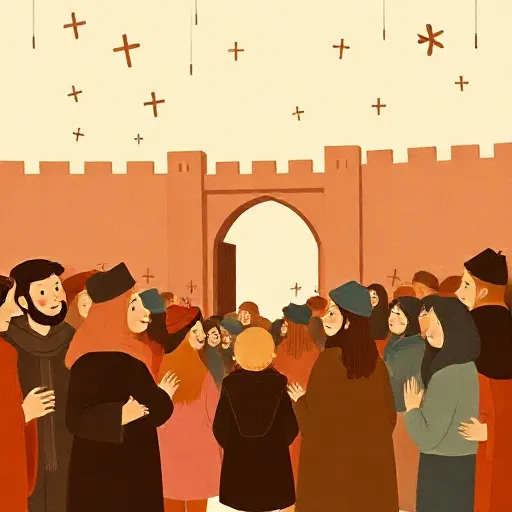
In 1295, in the Spanish town of Avila, a man stood up and called himself the messiah. Crowds of Jews rushed out to greet him. But instead of a savior, a freak rain began to fall. Drops landed on their clothes and dried into little crosses that stuck. Some witnesses hurried to the nearby city of Burgos to ask Rabbi Abner for advice. Abner (c. 1260–c. 1347) was a respected teacher—head of a yeshiva, a Jewish academy—and a philosopher who traded books and studied Arabic, Greek, and Jewish learning. That day’s strange event planted a seed of doubt in his mind: if Judaism was really true, why were the Jewish people still living in exile, scattered and waiting?
For more than twenty years Abner couldn’t let the question go. In 1317 he had a dream. A voice told him to become a “teacher of righteousness” and lead his people to freedom. Three more years of study brought a second dream. This time the figure wore clothes marked with crosses, like the cross of Jesus. Around 1320 or 1321, Abner converted to Christianity. He became a sacristan in Valladolid and wrote book after book trying to persuade other Jews to follow. Yet long after his conversion, he composed a work entirely in Hebrew, stuffed with Jewish sources and not a single Christian doctrine. It was called Ofrenda de Zelos (The Offering of Zeal), and it argued that every choice you’ll ever make is already determined. That book set off a firestorm, and at the center of it was the student he’d taught and loved.
The Student Who Said No: Pulgar’s Challenge
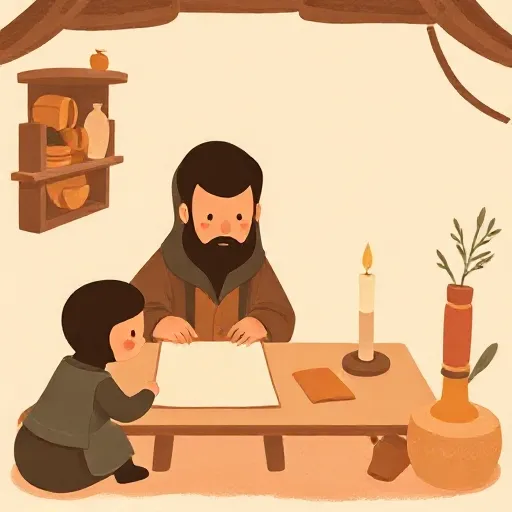
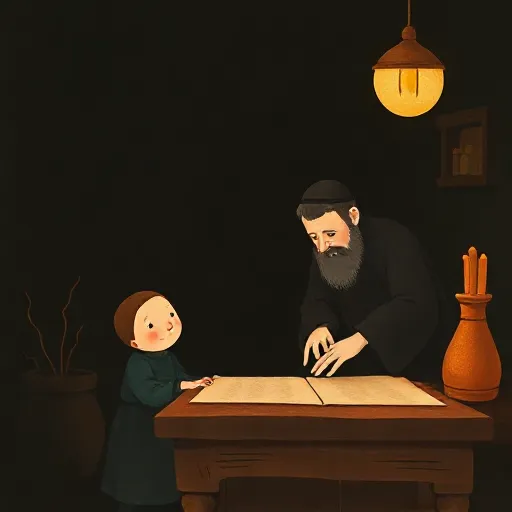
Abner’s only known student, Rabbi Isaac Pulgar, was a sharp philosopher himself. Even after the conversion, the two kept up a fierce exchange of letters. In one, Pulgar denied something many believers took for granted: that God knows ahead of time every little choice a person will make. Pulgar thought that if God already knows what you’ll decide, then your decision can’t really be free—it would be locked in place before you were even born. So he took a daring step. He said God doesn’t have foreknowledge of human choices. That way, people have genuine free will. For Pulgar, you can feel yourself choosing; no hidden chain of causes could take that away.
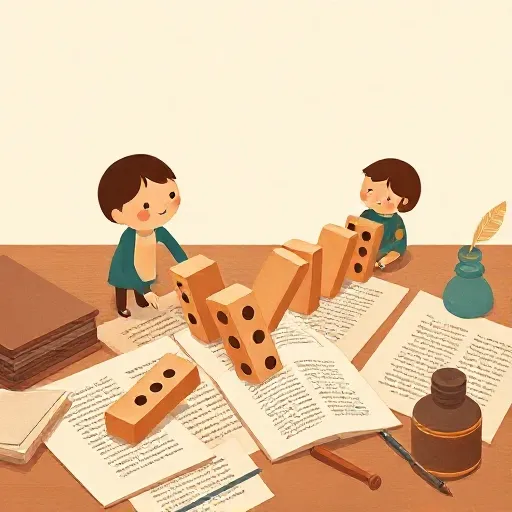
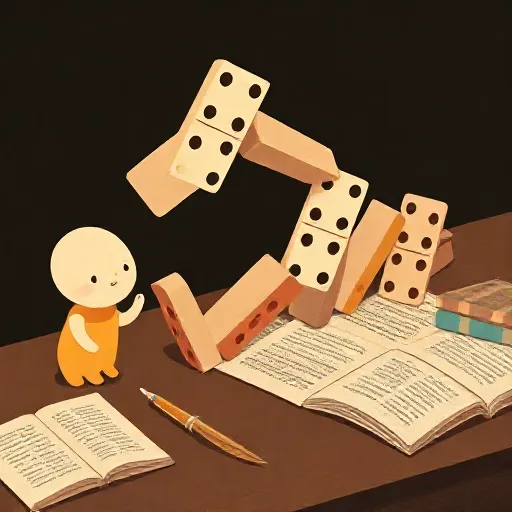
Abner couldn’t let that stand. He fired back with Ofrenda de Zelos, laying out a view that seemed to crush free will altogether. According to Abner, God does know everything ahead of time, and that’s not a problem—because there is no free will to protect. Every event, every thought, every act of will is thoroughly caused. This is determinism: the idea that everything that happens, including your decisions, follows necessarily from prior causes, like a row of dominoes. Abner claimed he could prove it just by looking at the nature of willing itself.
Wax, Water, and the Domino Effect
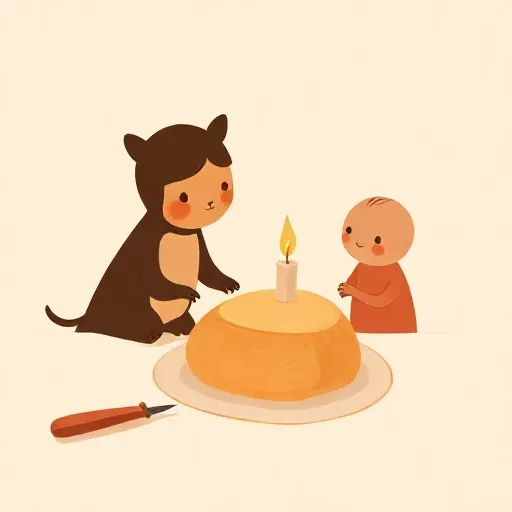
Abner asked: what is a will? He defined it as the power to pick between opposite alternatives. That power, he said, is timeless—like water’s ability to be liquid or solid, no matter what season it is. But every actual choosing, every volition (a single act of willing), happens in time and is brought about by its causes, just as water freezes only when the temperature drops.
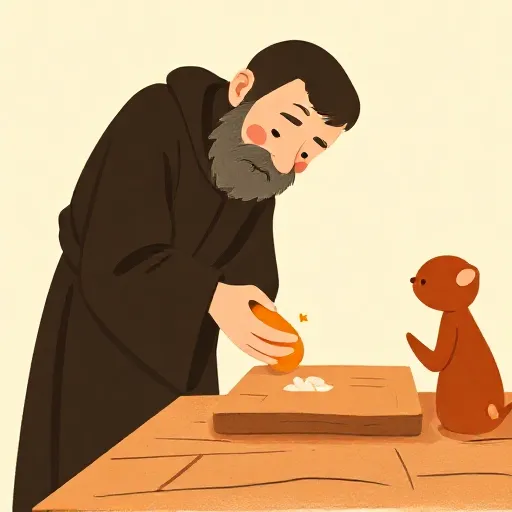
To make this vivid, he used the example of wax. Wax can be shaped into a sphere, a cube, or a star. But the real shape it takes at any moment depends entirely on what’s pushing it—a mold, a thumb, warm air. Nobody thinks the wax chooses its shape. For Abner, human choices work the same way: our will has a range of possibilities (sweet or salty?), but the actual decision is set by our appetites, memories, and imagination working together. Those inner forces are themselves caused by earlier events—a smell triggering a memory, a word heard years ago.
He went further. People usually say something is “possible” if it could happen or not happen. But Abner claimed that possibility is only a label for what we don’t know. Relative to yourself, you may think, “I could have picked vanilla.” Relative to the whole chain of causes in the universe, you couldn’t have. Everything is certain. What we call accidents—a car skidding off the road, a sudden sneeze—are only “accidental” because we don’t notice all the tiny forces that made them happen. If you had a perfect map of every cause, you’d see the sneeze was as inevitable as a falling stone.
God, being the first cause, knows every law and every link in the chain. So divine foreknowledge doesn’t threaten freedom; freedom was never there. Your decisions are no more free than the domino tiles you see.
If All Is Determined, Why Do We Need Rules?
Abner’s determinism led straight into a painful puzzle. If every action is already fixed, why did God send commandments—like “honor your parents” or “don’t steal”—that seem to ask us to choose? And how can it be fair to punish or reward someone for actions they had no control over?
Abner answered both questions with a startling idea. Punishment and reward aren’t special acts of God’s anger or kindness; they’re natural consequences. Imagine a teenager who eats nothing but candy. Eventually they get sick. The stomachache isn’t a punishment sent by a judge—it’s just what happens when you overload your body with sugar. Similarly, Abner held that forbidden acts carry harm within them, like a hidden thorn. A liar ends up distrusted; a thief lives in fear. That’s not God zapping them—it’s the built‑in result of their deed.
But if you can’t help what you do, is it fair that the thorn pricks you anyway? Abner compared it to a parent who forces a child to swallow bitter medicine. The child may kick and scream, but the medicine still works. The parent doesn’t need the child’s genuine free consent; the child’s body will be healed regardless. In the same way, obeying the Torah (the Jewish law) is like taking a cure. The commandments are causes added to the world, pushing people toward healthy living and away from destruction. You might feel forced, but the outcome is good whether you like it or not.
In Abner’s picture, the Torah, prophets, and even Jesus are all part of a grand causal net that nudges humanity toward understanding God and avoiding chaos. We experience our actions as chosen, but that feeling is just another domino in the chain. By explaining reward and punishment as natural, Abner thought he’d solved the puzzle: determinism doesn’t make morality pointless—it shows that good deeds are like medicine we’re all being made to take.
A Chain That Stretches to Today
Abner’s determinism didn’t stay buried in medieval manuscripts. About sixty years later, the great Jewish philosopher Hasdai Crescas (c. 1340–1410/1411) read Ofrenda de Zelos carefully. In his own major work, Light of the Lord, Crescas paraphrased whole passages from Abner and built a thorough system around the idea that everything is determined—though he reached different conclusions about God. Through Crescas, the seed grew further. In the 17th century, Baruch Spinoza (1632–1677), a thinker whose ideas changed Europe, drew heavily on Crescas. Spinoza argued that free will is an illusion, that every event flows necessarily from God’s nature. The dominoes that Abner first set up in a Jewish debate rattled across the centuries.
Today, science asks its own form of Abner’s question. Brain scanners show that a decision can be detected in neural activity almost half a second before you become aware of choosing. If your brain is already “casting its vote” before you consciously feel you’ve decided, are you really deciding? Courts face a similar puzzle. Suppose a defense lawyer shows that a defendant’s behavior was caused by a brain injury or a harsh upbringing—does that reduce responsibility? Abner would likely nod: every action has causes, and “blame” is just another way of tracing those causes, not a magical free act.
The fight between Abner and Pulgar hasn’t ended. Some neuroscientists and philosophers hold that determinism is true, others maintain that conscious free choice is real. But the deeper question isn’t just scientific. It’s personal: when you sit down to do your homework, were you always going to do it, or can you decide otherwise in that very moment? The way you answer shapes how you think about guilt, praise, and what it means to be a person.
Think about it
- If a scientist could predict every choice you’ll ever make, would it still make sense to punish people for breaking rules? Why or why not?
- Imagine you discover that your best friend was forced by a brain condition to believe something hurtful. Would it change how angry you feel at them?
- Can you think of a moment when you felt totally free to choose—but later you noticed little things that pushed you toward that choice? What does that tell you about who’s really in control?