What Does It Really Mean to 'Be Able to' Do Something?
The Tennis Player, a Missing Racket, and a Puzzle

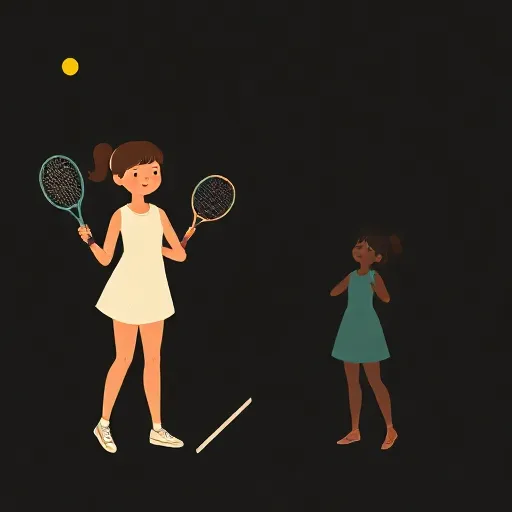
Imagine a trained tennis player standing at the service line, racket in hand, ball ready. Nothing stands between her and a smooth serve. Philosophers would ask: what exactly does it mean that she has the ability? Now imagine the same player miles away from any court, without a ball or racket. Does she still have the ability? Most of us would say yes — she trained for years, after all. But what kind of thing is that leftover ability, if she cannot actually serve right now?
To answer, we need to zoom out. An ability is a kind of power — something that can exist even when it is not being used. A wine glass has a disposition: it is fragile, disposed to break when struck, even when it sits safely on a shelf. A hiking trail has what the psychologist J. J. Gibson called an affordance: it offers the possibility of walking, even while no one walks it. Abilities are another branch of the power family; they belong only to agents (roughly, beings that can act). But not every power of an agent counts as an ability. The power to understand French, for instance, isn’t an ability because understanding happens to you, while speaking French is an action you do. So here we’ll define ability as a power that relates an agent to an action. That definition isn’t perfect — drawing the line between actions and non-actions can get blurry — but it captures the heart of what we are talking about when we say “she can serve.”
Philosophers also make a sharp distinction between general ability and specific ability. Our tennis player without a racket lacks the specific ability to serve right this minute, but she still has the general ability to serve — it’s a trained skill that she carries around. The theories that follow try to explain what that general, ongoing power really is.
What an Ability Is Not: Skills and Knowing How
You might think that having an ability is just the same as knowing how to do something. The 20th-century philosopher Gilbert Ryle defended this idea: to know how to swim is exactly to have the ability to swim. But many philosophers today reject that view. They point to the intellectualist account, championed by Jason Stanley and Timothy Williamson, which says that knowing how is really knowing a fact — knowing that some way is a way for you to do the action. On this picture, knowing how and having an ability come apart.
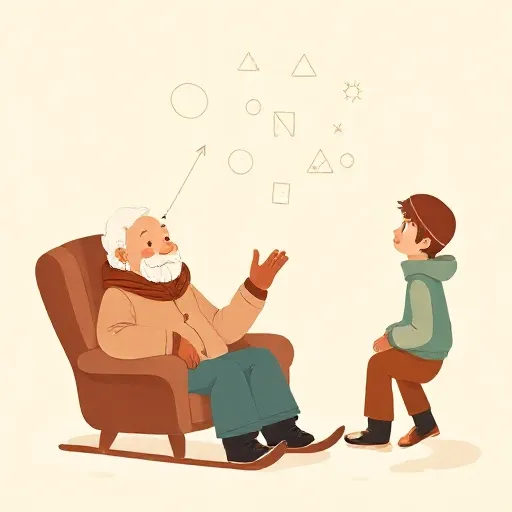
Consider a retired ski instructor whose knees no longer work on the slopes. He can still explain exactly how to carve a turn, and his knowledge is genuine. He knows how to ski, yet he lacks the physical ability to do it. Defenders of the Rylean link might reply that in some broader sense he still has the ability — after all, if we fixed his body he could ski — but this pushes us to ask which sense of “ability” is doing the work.
Skill muddies the water further. Skilled actions seem to involve more than raw ability: they require practice, flexibility, and strategic control. Some philosophers, like Barbara Vihvelin and John Maier, treat skill as a refined subset of abilities. Others, like Carlotta Pavese, argue that skill is itself a kind of propositional knowledge. These disagreements remind us that even everyday words like “skill” hide a knotty unresolved debate.
The “If You Try” Theory (and the Candy Phobia That Defeats It)
For centuries, the most popular theory of ability has been the conditional analysis. In its simplest form, it says:
You have the ability to do A if you would do A if you tried to.
This seems right at first. If you are able to wiggle your ear, you will wiggle it if you try. The analysis appears in the work of thinkers from David Hume (18th century) onward, often as a way to show that free action is compatible with a determined world. But it runs into trouble fast.
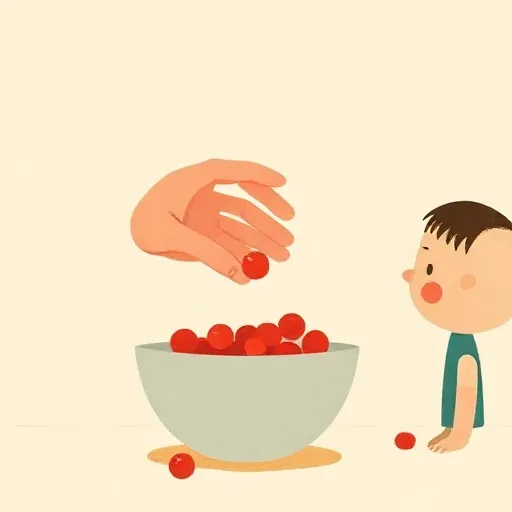
The American philosopher Keith Lehrer (born 1936) imagined a person offered a bowl of red sugar candy who has a pathological aversion to red sweets — they remind her of drops of blood. It is true that if she tried to take one, she would succeed. Yet because of her psychological block, she is utterly unable to try; the attempt is not available to her. So the conditional is true, but the ability seems absent. The analysis fails as a sufficient condition.
There is also a problem from necessity. A good golfer stands over an easy putt. She tries to make it and misses. So it is false that she would make it if she tried — she already tried! Yet we still want to say she had the ability to sink that putt. A defender might reply that the conditional analysis was only ever meant for specific ability (being in a position to perform the action right then), not the general ability she retains. But even that move does not fix the candy phobia case, because the problem lies in the gap between trying and being able to try — a gap that a simple if-try formula cannot bridge.
Abilities as Dispositions: A New Spin

Some contemporary philosophers, like Michael Fara and Kadri Vihvelin, propose that an ability is not a conditional but a disposition. Dispositions, such as fragility, can survive masks and finks. Imagine a fragile glass stuffed with styrofoam: it would not break if struck, yet it is still disposed to break. Or imagine a glass that, if it were about to be struck, would instantly turn into steel — a fink. It still has the fragile disposition. In the same way, ability might be a disposition to succeed when you try, even if hidden blockers or would-be interveners stop you from succeeding on a particular occasion.
Fara’s version says: you have the ability to A if you have the disposition to A when, in the relevant circumstances, you try. This neatly explains why the golfer still has the ability even though her try failed: the disposition is still there, masked by a gust of wind or a slip.
But a new worry appears. The philosopher Randolph Clarke argues that if a mask or fink sits outside your control — say, a neuroscientist secretly ready to zap your brain so you cannot do otherwise — you may have the disposition but still lack the genuine ability in the sense tied to free choice. What is missing is that the action must be up to you. Once again, the distinction between general and specific abilities becomes crucial. The new dispositionalist can claim that you keep the general ability, while conceding you lack the specific version. Others, like Romy Jaster, shift to a success-rate view: you have an ability if you succeed in a sufficiently high proportion of the relevant situations where you intend to act. This approach dodges the simple conditional while keeping the hypothetical spirit alive.
Can Ability Be a Kind of Possibility? The Card Trick That Says No
Another major family is the modal analysis: to have an ability is just for it to be possible (relative to some restricted set of conditions) that you perform the action. Using the language of possible worlds, we say you are able to A if, in some world that matches the right set of facts about you and your situation, you A. This can handle many cases elegantly, and the philosopher and linguist Angelika Kratzer (20th–21st century) developed a powerful contextual version: what counts as “possible” shifts with the speaker’s interests.
But the British philosopher Anthony Kenny (born 1931) raised a logical challenge that still stings. First, doing something by a wild fluke does not mean you had the ability. A hopeless darts player may hit the bullseye once in a lifetime by luck, yet lack the ability to hit the bull. In modal logic, if you actually do A, it is necessary that A is possible. But ability does not obey that principle.
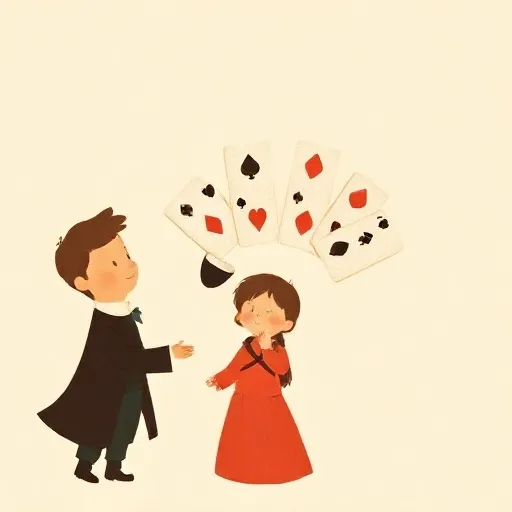
Second, Kenny asked us to imagine a card trick: you have the ability to pick a card that is either red or black (by just picking any card from the deck). But you do not have the ability to pick a red card on request — you lack the skill to identify red cards by touch — nor the ability to pick a black card on request. Yet if ability were just a kind of possibility, then from “it is possible that you pick red or black” we could conclude “it is possible that you pick red or possible that you pick black.” That inference fails. Ability does not distribute over “or.” This means ability is not a standard possibility operator.
Some philosophers respond by tweaking the modal account to use sets of worlds rather than a single world, so that actions must be reliable enough across nearby worlds. But Kenny’s observations pushed many to look beyond possibility altogether.
Why It Still Matters: Free Will and Disability
Theories of ability are not just abstract puzzles — they shape two of the loudest conversations in philosophy.
First, free will. Many compatibilists (who believe free will is compatible with determinism) have tried to use accounts of ability to show that we keep the ability to do otherwise even in a determined world. The 20th-century philosopher Peter van Inwagen pushed back: the incompatibilist doesn’t just need a better definition of ability but an argument that such an ability can coexist with determinism, and no mere analysis provides that. A more recent twist concerns Frankfurt cases: imagine a neuroscientist who will step in and make you choose a certain action if you are about to choose the other, but you never actually waver — so the intervention never happens. Did you still have the ability to do otherwise? If we care about general ability, perhaps you did; if only specific ability counts, you didn’t. The dispute affects whether moral responsibility requires the genuine possibility of acting differently.
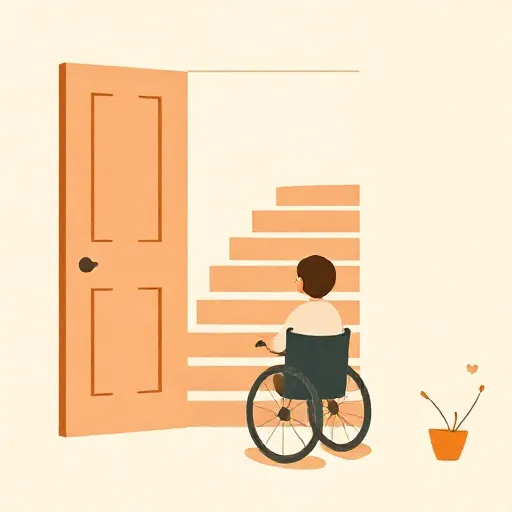
Second, disability. Some philosophers defend an ability-based view of disability: to be disabled is to lack certain abilities. Naturalistic versions compare abilities to species norms (what a typical human adult can do), while evaluative versions pick abilities that matter for justice or well-being. These views face a sharp challenge from Elizabeth Barnes’ analysis: conditions like fibromyalgia bring fatigue and chronic pain, but it is not obvious which specific ability is missing — the ability to work a 40-hour week, perhaps, but that is already a social demand. The deeper worry is that if having abilities is always valuable, then lacking them looks like a “bad difference,” a claim the Disability Pride movement rejects. Philosophers respond either by insisting some lacks really are bad, or by arguing that having more abilities isn’t always better so lacking some isn’t always worse.
So the next time you catch yourself saying “I can’t,” you are stepping into a centuries-old argument. The answer hangs not just on your muscles or your mind, but on what kind of invisible power an ability really is.
Think about it
- If a soccer player can score a goal only when the wind is calm and the field is dry, does she still have the ability to score? Why might it matter whether your answer is yes or no?
- Imagine a friend says they could have chosen a different dessert at lunch, even though all their past choices, brain states, and circumstances were exactly the same. What kind of ability are they claiming — and do you believe them?
- If society builds ramps everywhere, does that change what counts as being able to enter a building, or just change what opportunities exist? Who should decide?